

CATL adds 1.64 GWh in Campeche and ties the BESS market to incentives
CATL will supply 313 MW and 1.64 GWh of energy storage to La Alegría in Campeche. These are the three conditions for the Mexican BESS market.
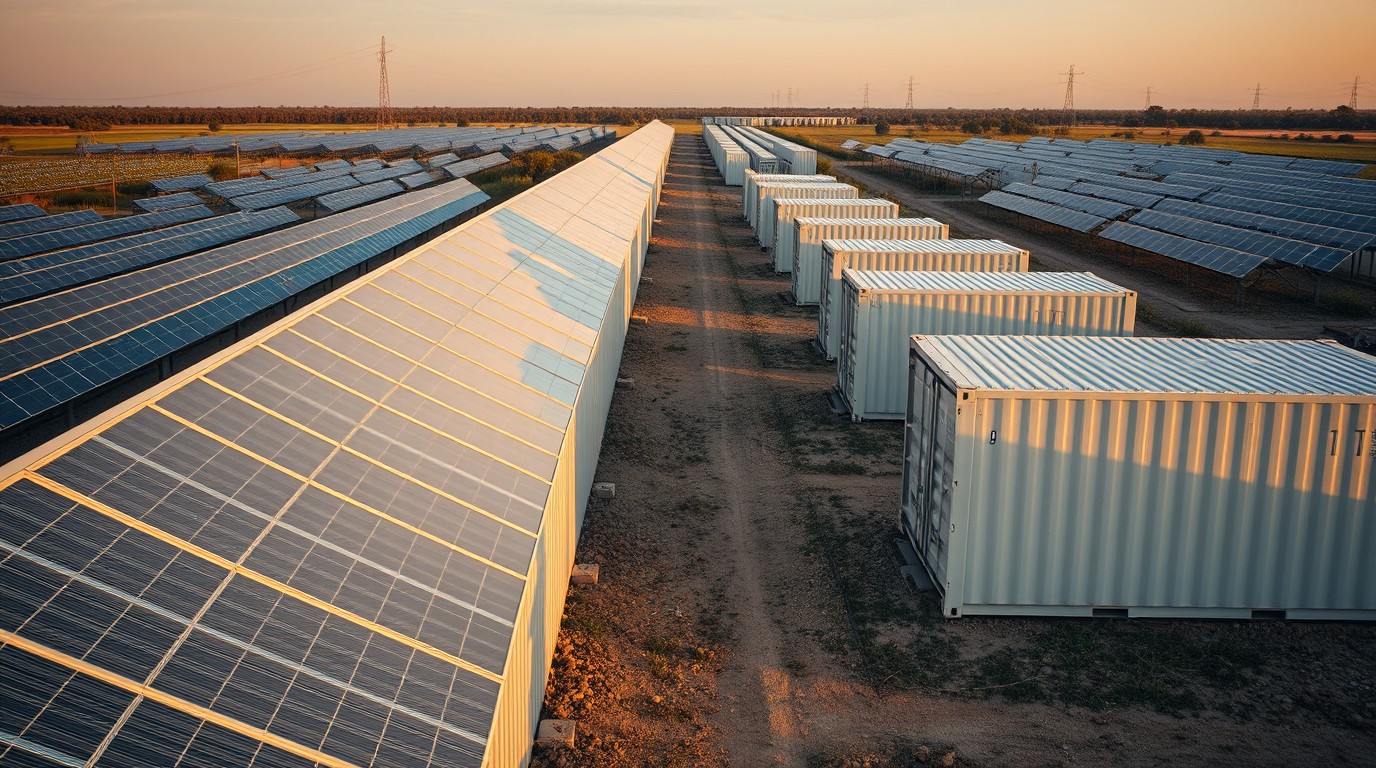
CATL, the world's largest manufacturer of batteries for electric vehicles, is looking to expand its energy storage business in Mexico, and Amanda Xu, its chief technology officer, said in remarks published on November 2, 2026 that the market will only take off once investors find the conditions to commit capital. The company has already signed a supply deal for 313 MW and 1,639 MWh for the La Alegría solar project in Campeche.
Xu spoke during All Energy Australia 2026 and described how the share of BESS in Mexico remains low and is currently seen as a grid quality upgrade to back wind and solar power. The bet comes as Mexico requires new renewable plants to include storage equivalent to 30% of their capacity, with a minimum duration of three hours, according to Energía Estratégica. That rule covers the 37 projects CFE awarded to 31 developers for more than 7,411 MW and a specific tender of about 900 MW, close to 3 GWh, whose first projects are expected by the end of 2026 and in 2027. For an industrial operator, the question is no longer whether there will be batteries but who pays for them.
The Campeche contract, reported by pv magazine México, covers 1,639.45 MWh and 5.24 hours of discharge using the TENER platform, LFP cells and 20-foot containers of 6.25 MWh. It is the first Mexican BESS above 1 GWh, according to the specialist publication. The environmental authorization of March 2026 envisioned 177.69 MW and 314.98 MWh, so the new configuration multiplies the energy by 5.2. The solar plant adds 788.7 MWp, 1.15 million panels and a 400 kV line. The government of Campeche estimated 845 million dollars for the twin La Alegría and La Esperanza complex.
Xu, cited by Expansión, laid out three conditions: complying with the Grid Code, having reliable equipment and creating incentives. She recalled that the United Kingdom, the United States and Australia use support from governments and system operators to attract private capital.
The data leaves on the table the levelized cost of storage and the revenue structure that will accompany the tender. A developer with a project in its pipeline will need to know whether the 30% mandate translates into bankable contracts or into an investment with no clear return.
This article was drafted with the assistance of artificial intelligence from verified sources and reviewed by a human editor before publication.